Loss and Damage
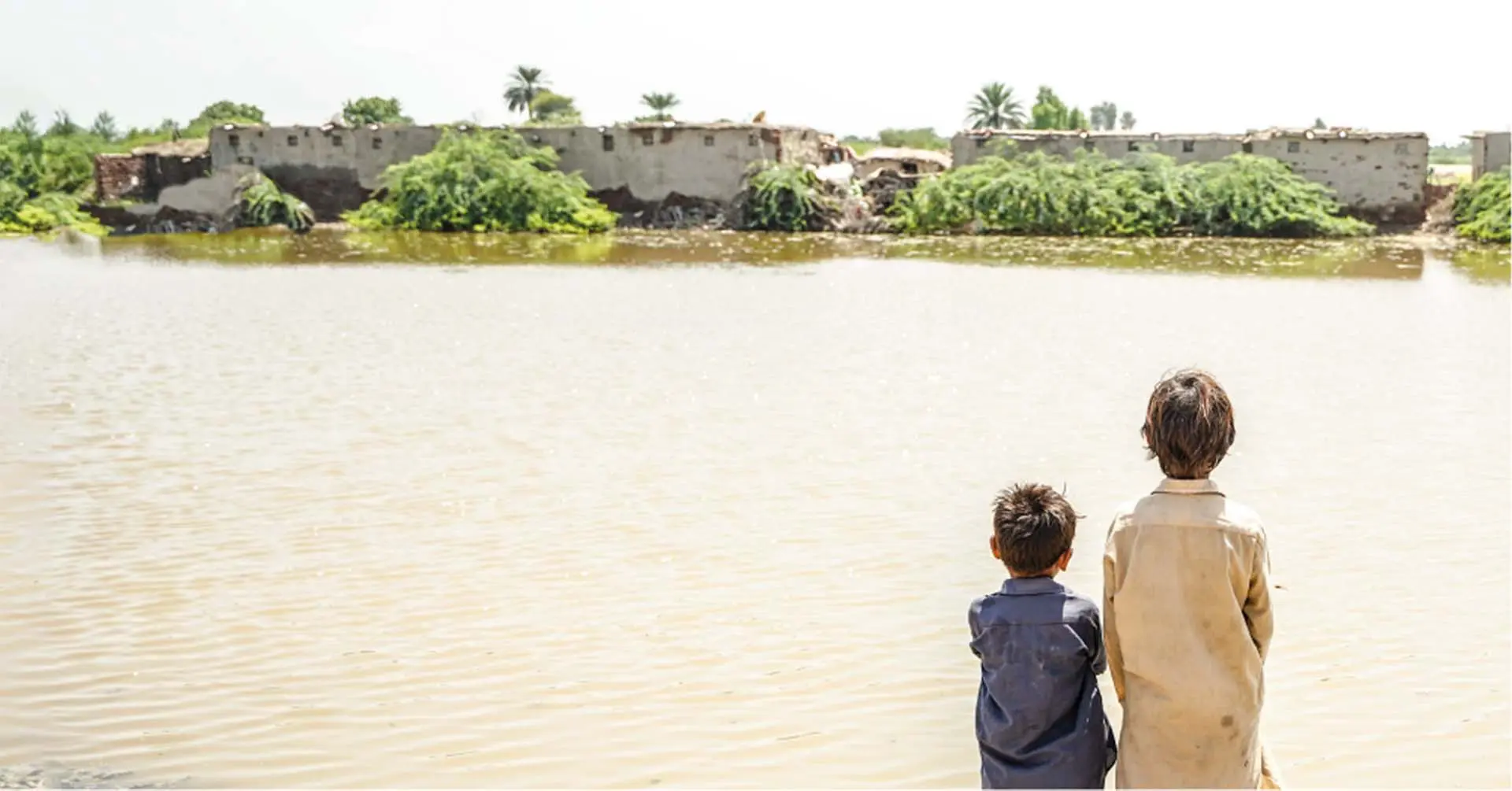
While adaptation can minimise the harm caused by climate disaster, adaptation can only go so far. There are some consequences to which adaptation is impossible and we are seeing the climate crisis destroying people’s lives, homes and livelihoods on an unprecedented scale. Since 2008, climate change has uprooted some 21 million people from their homes each year.
By 2030 it’s projected that climate change will cost developing countries up to $580 billion in Loss and Damage. The recent floods in Pakistan alone are likely to cost $20-30 billion.
Since 2021 we have been calling for a dedicated global finance facility to be established to address Loss and Damage from climate-related disasters. In line with the ‘Polluter Pays’ principle, the countries with the largest emissions should be the ones to pay for the damages, and it must come in the form of grants – not loans that trap poorer countries in long-term debt.
This is something that climate-vulnerable countries in the Global South have been calling for for over three decades. So, it was a great victory for all campaigners when this year’s COP27 concluded with a last minute agreement on the funding of a Loss and Damage facility.
It’s welcomed news, but there has been no agreement yet on how big the fund will be, which countries will finance it and for how long, so there is still much more to be done. We will continue to campaign for a just settlement for those worst affected by the climate crisis.
Debt moratoriums
Currently, poorer countries in the Global South are unable to address or build resilience to climate crisis related disasters, as they are forced to spend five times more on debt repayments.
The effects of climate change are disproportionately felt by the poorest countries where increasingly intense and frequent disasters are diverting already limited financial resources away from vital public expenditures.
We call on the International Monetary Fund (IMF) and World Bank to create a post-catastrophe debt relief fund, and automatic interest-free moratoriums on debt repayments for all developing countries experiencing climate disasters.